Európai rulett
Harminchét rekesz, egy zéró, 2,70%. A viszonyítási alapnak számító kerék.
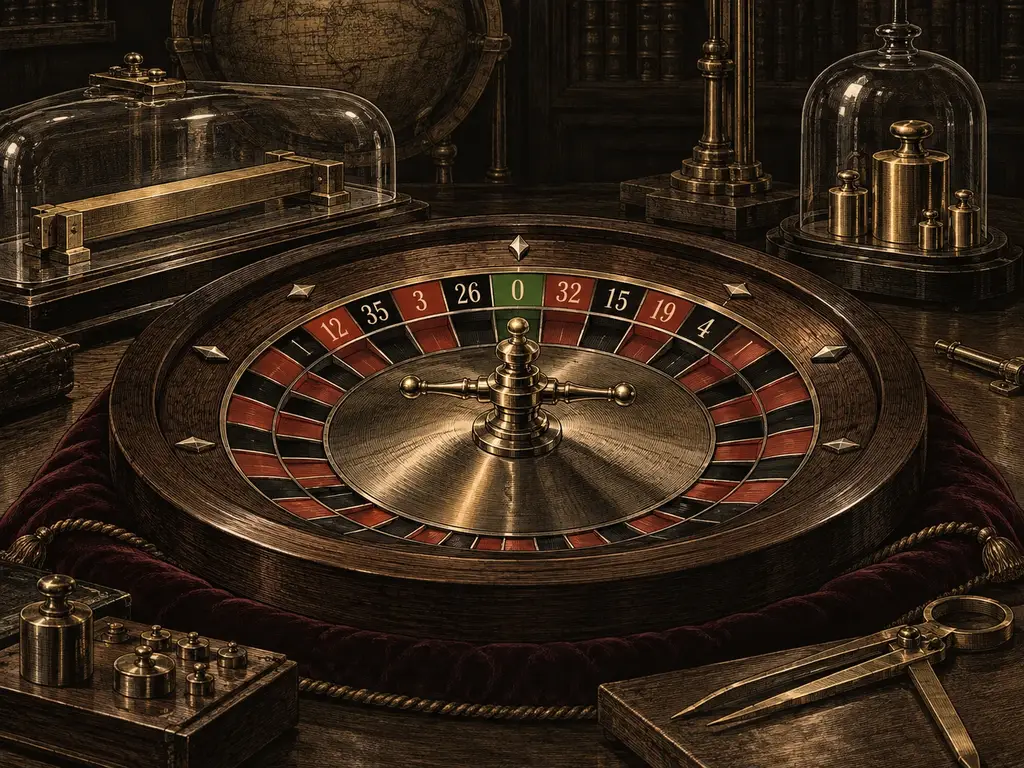
On a fair single-zero wheel, a standard bet covering n numbers pays 36/n − 1 to 1 and has a house edge of 1/37, about 2.70%. Special payouts and zero-return rules can change that figure.
Hol találod
Single-zerokerékZéróAz egyetlen zöld rekesz, amelyet sem egyszerű esély, sem tucat, sem oszlop nem fed le; a házelőny forrása. Más néven: egyetlen zéró, 0.Teljes cikk → roulette is offered on casino floors and online. A title or location alone does not establish its rules: count the pocketsfelszerelésRekeszA rotor 37 számozott rekeszének egyike. Angolul még: slot, cup.Teljes cikk → and check the payoutpénzKifizetésAmit a nyertes tét visszaad, „X az 1-hez” formában megadva, a visszajáró téten felül.Teljes cikk → table and treatment of zero.
Mibe kerül egy zéró: az egyzérós rulettkerék
On a fair wheel, a straight uptétTeljes számEgyetlen szám, 35:1 arányban fizet.Teljes cikk → wins with probabilitymatematikaValószínűségEgy kimenetel esélye, 0-tól 1-ig vagy 0%-tól 100%-ig. Egy szám: 1/37 = 2,70%.Teljes cikk → 1/37 and pays 35 to 1. Its expected net result per unitpénzEgységAz alaptét, amelyben egy rendszer vagy egy játékos számol. A progressziókat egységekben írják le, hogy bármelyik asztalon alkalmazhatók legyenek.Teljes cikk → is 35/37 − 36/37 = −1/37 ≈ −2.70%. The standard bets in the table have the same expected result: each covers n of the 37 pockets and pays 36/n − 1 to 1. This assumes no special treatment of zero. The sequence of numbers around the wheel is the one used throughout this site: 0 32 15 19 4 21 2 25 17 34 6 27 13 36 11 30 8 23 10 5 24 16 33 1 20 14 31 9 22 18 29 7 28 12 35 3 26.
A többiekhez képest
La partageszabályLa partageFrancia szabály: ha zéró jön ki, az egyszerű esélyre tett tét fele visszajár. Ezeken a téteken 1,35%-ra felezi a házelőnyt.Teljes cikk → on the same fair single-zero wheel halves the even-money edge by returning half the stake on zero. Standard double-zero even-money betstétEgyszerű esélyPiros/fekete, páratlan/páros, nagy/kicsi. 18 szám, 1:1 arányban fizet.Teljes cikk → instead have an edge of 2/38, about 5.26%, almost twice the standard single-zero figure. Most numbered bets are familiar across the three formats, but the zero area, available combination bets and special rules can differ.
Bemondott tétek az európai rulettkeréken
Traditional sectorkerékSzektorA kerék egymás melletti rekeszekből álló íve, szemben a tablón alkotott csoportokkal.Teljes cikk → bets (voisins, tiers, orphelinsFR · szektorOrphelins„Árvák”: a nyolc szám, amely a voisins és a tiers után megmarad: 17, 34, 6 és 1, 20, 14, 31, 9.Teljes cikk →, neighborstétSzomszédokEgy szám és a keréken mindkét oldalán a két-két szomszédos rekesz, öt teljes számra tett zsetonnal.Teljes cikk →) use the wheel sequence to group numbers. A game may offer them through a racetrackasztalRacetrackAz élő és az elektronikus tablók ovális sávja, amely a számokat a kerék sorrendjében mutatja; a szomszédok és a szektortétek egyetlen koppintással tehetők meg rajta.Teljes cikk → or special-bets panel; check which combinations are available. When these combinations use standard component bets on a fair single-zero wheel, their house edgematematikaHázelőnyAz egyes tétekből a kaszinó által átlagosan megtartott rész: az európai rulettben 2,70%.Teljes cikk → is also about 2.70% of the total stake.
Megjegyzés a feliratokról
The game name alone does not settle the rules. Count the pockets and check the payout table and treatment of zero. On a fair single-zero wheel, la partage reduces the even-money edge to 1/74, about 1.35%. Other special rules need their own calculation.
Kérdések
For standard even-money bets, a fair single-zero table with la partage has a lower house edge than one where zero loses the whole stake: about 1.35% versus 2.70%. Compare the rules and payouts of the particular games rather than ranking them by name alone.
A legtöbb élő asztalon igen. Egyes RNG-asztalokon nincsenek.
Egy kis humor
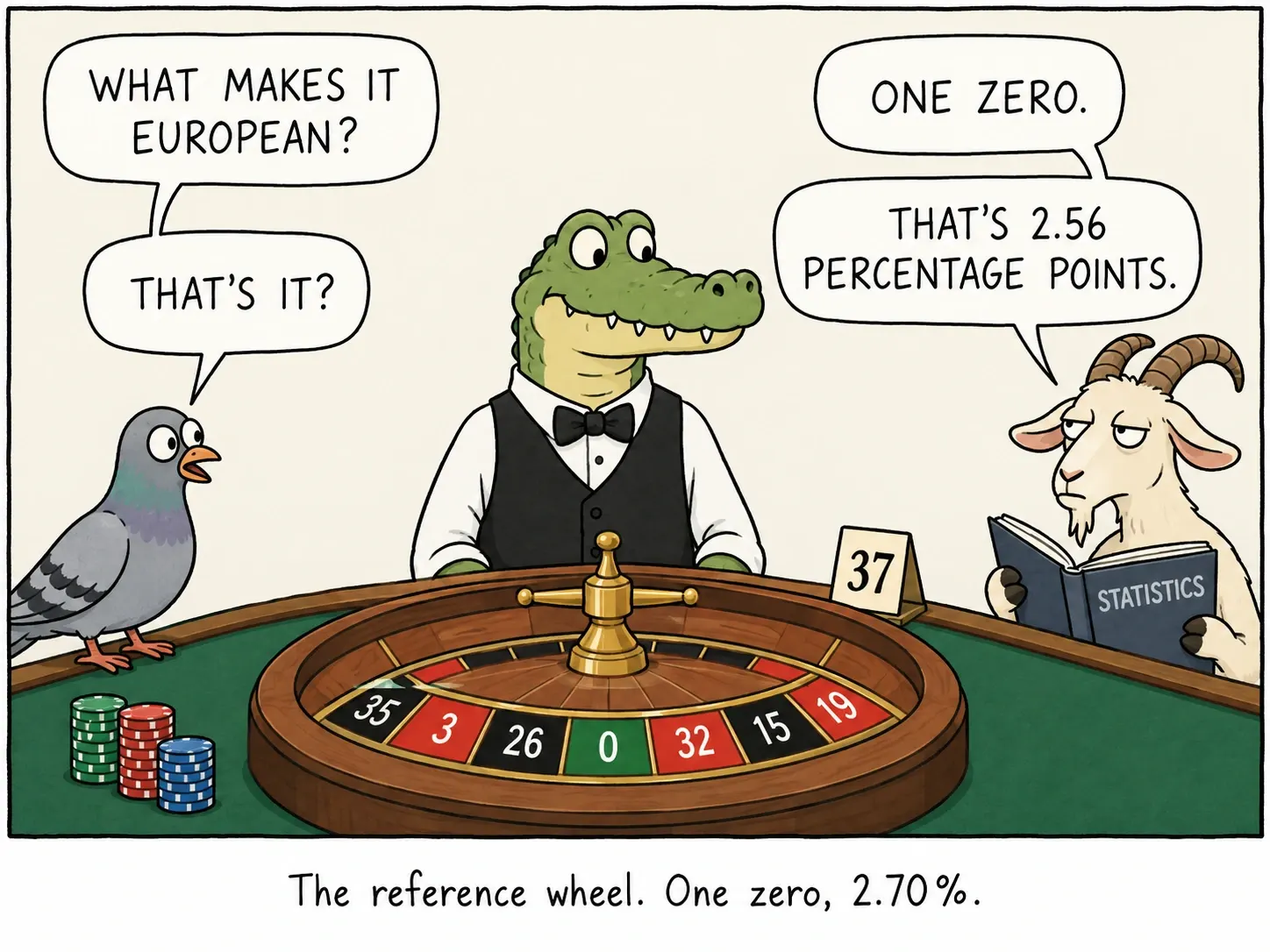
A viszonyítási alap. Egy zéró, 2,70%.
Források
- Ethier, S. N. The Doctrine of Chances: Probabilistic Aspects of Gambling.