A rulettrendszerek története
Két évszázadnyi ember, aki szabályokba foglalta, hogyan változtassa a tétjét.
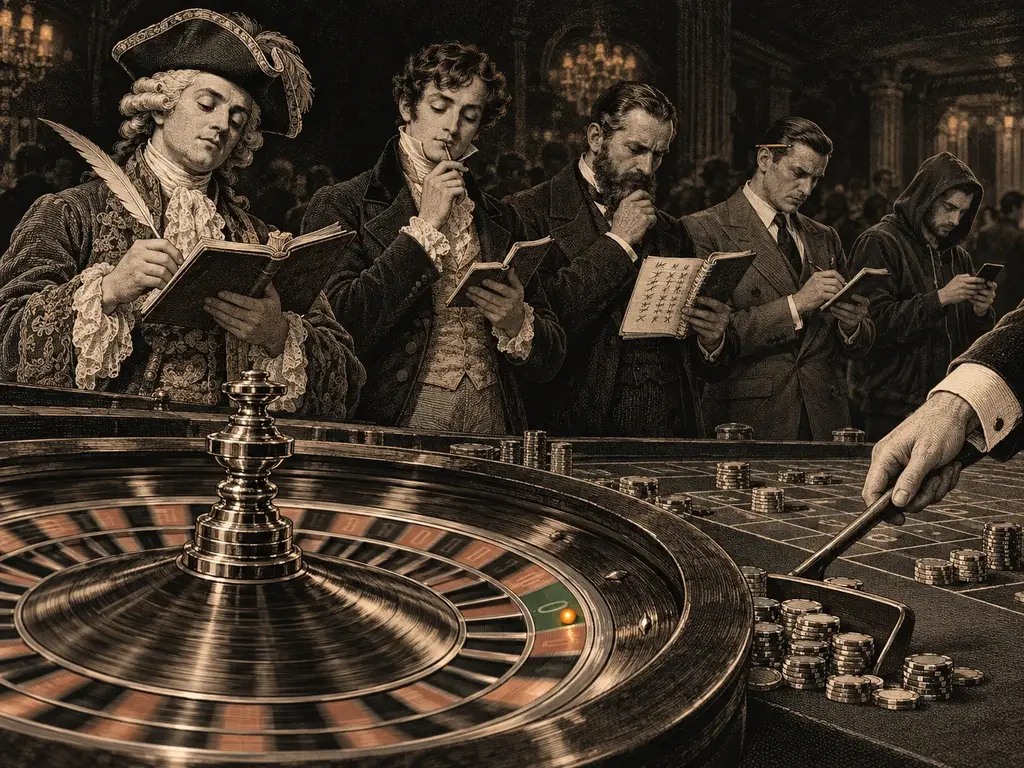
A Martingale-rendszer 18. századi; a D’Alembert-rendszer egy matematikusról kapta a nevét, aki nem kedvelte; a Labouchère-rendszer egy viktoriánus politikus hobbija volt. Akkor sem működött egyik sem.
Martingale
The 1762 Académie française dictionary records martingalestratégiaMartingaleProgresszió, amely minden veszteség után megduplázza a tétet. Hogy mit tesz és mit nem, azt a Stratégia rovatban találod.Teljes cikk → as a gambling term for staking what has been lost. Its 1878 edition explicitly describes doubling after a loss and also uses the word more broadly for betting schemes. These entries document usage; they do not identify a single inventor.
Today the familiar doubling progressionstratégiaProgresszióMinden szabály, amely a korábbi eredmények alapján változtatja a tétet. A negatív progressziók veszteség után emelik, a pozitívak nyerés után.Teljes cikk → aims to recover previous losses and gain one starting unitpénzEgységAz alaptét, amelyben egy rendszer vagy egy játékos számol. A progressziókat egységekben írják le, hogy bármelyik asztalon alkalmazhatók legyenek.Teljes cikk → when a win arrives. A finite bankrollpénzBankrollA játékra félretett teljes összeg. A bankrollkezelés annak eldöntése, mennyit kockáztatsz belőle tétenként és játékmenetenként.Teljes cikk → or table limitasztalAsztallimitA megengedett minimum- és maximumtét. A maximum az, ami megállítja a duplázó progressziókat.Teljes cikk → can stop the sequence first. The Strategy section shows how those limits affect a session.
D’Alembert
The progression bearing d’Alembert’s name raises the stake by one unit after a loss and lowers it after a win. The name alone does not prove who devised or endorsed the betting rule.
Its mathematical issue is straightforward: on independent spinsmatematikaFüggetlen pörgetésekMinden pörgetésnek ugyanazok a valószínűségei, az előzményektől függetlenül. Az oldal minden számításának ez az alapja.Teljes cikk →, a run of one outcome does not make the opposite outcome due. A famous namesake does not change that assumption or the payoutpénzKifizetésAmit a nyertes tét visszaad, „X az 1-hez” formában megadva, a visszajáró téten felül.Teljes cikk →.
Labouchère
The cancellation system uses a list of numbers to determine the next stake. A win removes entries and a loss adds an entry; the Strategy section sets out the rules and examples. Historical stories about its namesake should be distinguished from evidence that the method creates an advantage.
A sequence may clear with a profit, but a losing run can leave a growing list and larger required stakes. How often it clears depends on the starting list, bankroll, limits and stopping rule. There is no universal success percentage.
A 20. század
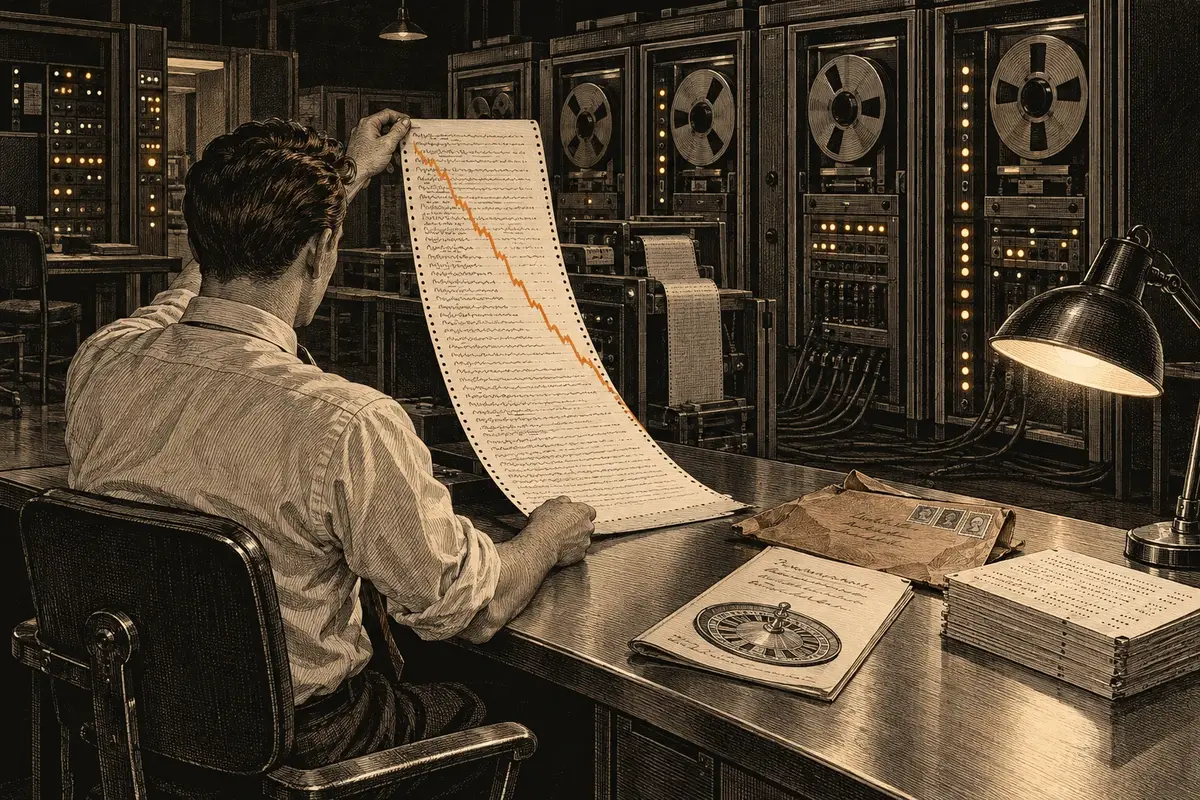
A simulation can show how a specified system behaves under a chosen wheel model. It cannot test every possible rule, and a finite run need not return exactly the theoretical house edgematematikaHázelőnyAz egyes tétekből a kaszinó által átlagosan megtartott rész: az európai rulettben 2,70%.Teljes cikk →.
For independent uniform single-zerokerékZéróAz egyetlen zöld rekesz, amelyet sem egyszerű esély, sem tucat, sem oszlop nem fed le; a házelőny forrása. Más néven: egyetlen zéró, 0.Teljes cikk → spins with standard full-loss-on-zero payouts, each unit staked has expected net return −1/37. For a bounded session whose stakes are chosen using information available before each spin, adding the conditional expectations gives expected lossmatematikaVárható veszteségA várható érték szorozva a megtett tétek összegével; az egy játékmenet vagy időszak alatt átlagosan elveszített összeg.Teljes cikk → equal to 1/37 of expected turnoverpénzForgalomA játékmenet vagy időszak alatt megtett tétek teljes összege, az újra megtett nyereményeket is beleszámítva. Más néven: handle, action.Teljes cikk →. Stopping or changing stakes can change the distribution of results, but not create positive expectation under those assumptions. Other payouts, such as la partageszabályLa partageFrancia szabály: ha zéró jön ki, az egyszerű esélyre tett tét fele visszajár. Ezeken a téteken 1,35%-ra felezi a házelőnyt.Teljes cikk →, need their own calculation.
Tévhit: Mindig nyerő rulettstratégiaFibonacci rulettstratégia
Miért maradnak fenn
A demonstration can end in profit without showing that the method has an edge. Some rules favor frequent small wins at the cost of occasional large losses; others do the reverse. The proportions depend on the exact rules and limits.
When comparing systems, look at all completed sessions, total stakes, losses and stopping conditions. A selected winning example leaves out the information needed to assess the claim.
Eladó rendszerek
Systems have also been sold with elaborate names and entry rules. The examples below illustrate the arithmetic of specific rules; they are not evidence of who first invented or marketed them. Waiting for a pattern does not alter the next independent spin’s probabilities.
Az egyetlen, ami nem rendszer
Megállási szabályok: előre eldönteni, mekkora veszteség vagy nyereség után állsz fel. Gyakran egy rendszer részeként árulják őket, és ez az egyetlen rész, amely bármit is tesz, mert csökkenti a forgalmat. Nincs névadójuk, ami illik hozzájuk.
Kérdések
A Martingale-rendszer, legalább egy évszázaddal. A veszteség utáni duplázás az első ötlet, ami mindenkinek eszébe jut.
D’Alembert jutott ehhez a legközelebb, véletlenül. Pascal, Fermat, Huygens, Bernoulli és Laplace mind elmagyarázták, miért buknak meg.
Mert a legtöbb játékmenet nyereséggel zárul, és egy nyerő játékmenetről videót készíteni olcsó.
Egy kis humor
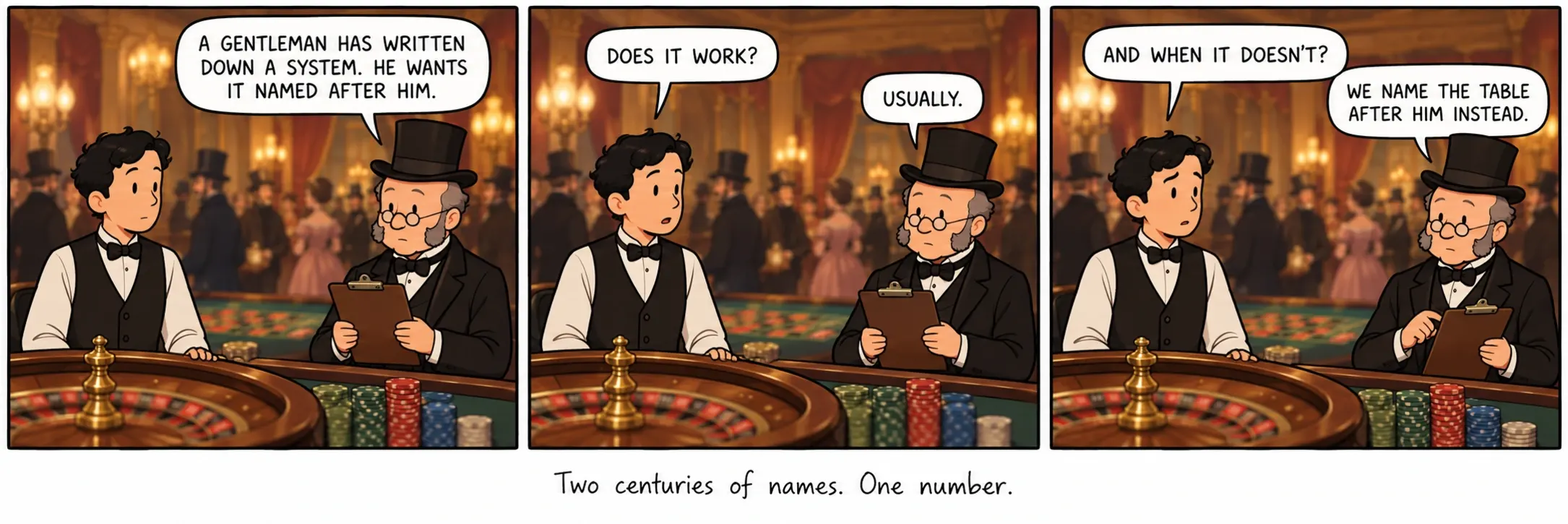
Két évszázadnyi név. Egyetlen szám.
Források
- Thorp, E. O. „Optimal gambling systems for favorable games.”
- Thorp, E. O. The Mathematics of Gambling.
- Doob, J. L. „Note on probability.”
- Halmos, P. R. „Invariants of certain stochastic transformations: the mathematical theory of gambling systems.”
- d’Alembert, J. „Croix ou pile.”
- Schwartz, D. G. Roll the Bones: The History of Gambling.
- Kavanagh, T. M. Dice, Cards, Wheels: A Different History of French Culture.
- Bollman, M. Mathematics of the Big Four Casino Table Games: Blackjack, Baccarat, Craps, & Roulette.
- Académie française, a martingale szócikk, 1762
- Académie française, a martingale szócikk, 1878